Most UK bedrooms come with one wardrobe, and it is rarely a generous one. Built-in wardrobes in older properties are often shallow enough that a hanger sits at an angle, and plenty of newer flats and rentals give you a single freestanding wardrobe expected to hold everything from work shirts to spare bedding, with no airing cupboard or walk-in closet to take the overflow.
The instinct is to buy a bigger wardrobe, but that is rarely possible in a rented flat or a boxy period bedroom where the door barely clears the bed. The better fix is to organise the wardrobe you already have properly: the space above the rail, the floor underneath, the back of the door and the wall beside it can all do more work than they currently do.
Get more from the hanging space you already have
The rail is usually the most wasted part of a UK wardrobe, since most people hang clothes in one row with big gaps between hangers.
-
Switch to slimline velvet hangers. They take up a fraction of the space of wooden or plastic hangers and grip fabric so clothes stop sliding off, which means the same rail holds noticeably more without any extra depth or width.
-
Add a second rail underneath the first. Shirts, folded trousers on hangers and children's clothes rarely need the full drop of a wardrobe, so a lower rail for shorter items effectively doubles hanging space without any building work.
-
Group clothes by category and colour along the rail. Splitting work, evening and casual wear into their own sections means mornings do not involve pulling out five hangers to find the one you actually want.
-
Hang a fabric organiser with shelves down one end of the rail. Jumpers, bags and anything that does not fold well onto a hanger get a dedicated slot instead of being wedged in wherever there is a gap.
Use the floor of the wardrobe for more than a shoe pile
The floor of most UK wardrobes ends up as a heap of shoes and stray bags, which wastes the most accessible storage in the whole unit.
-
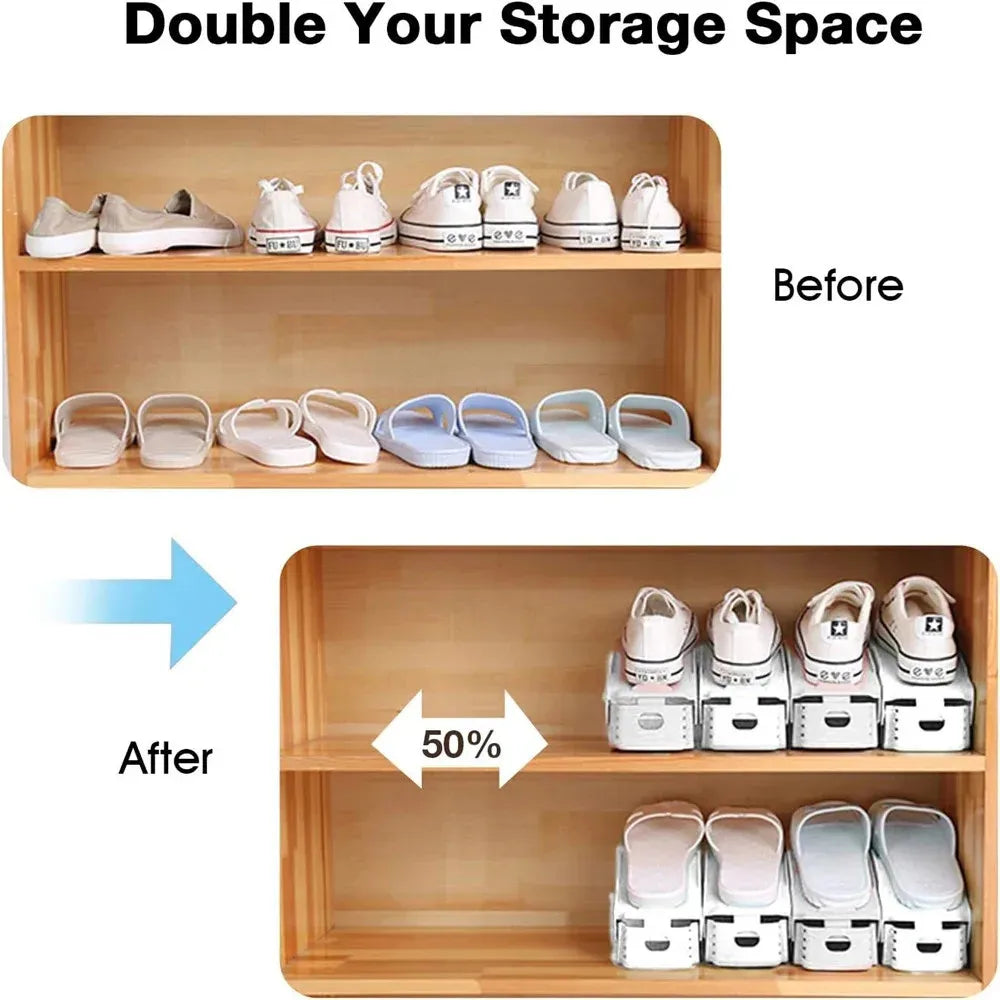
Add a stackable shoe rack instead of leaving shoes in a pile. The Double Layer Shoe Rack stacks two rows of adjustable slots in the same footprint as a single layer, roughly doubling floor storage for anything from slippers to boots without needing a separate shoe cabinet elsewhere in the room.
-
Dry and deodorise shoes before they go back in. An Electric Shoe Dryer & Deodoriser uses warm air and UV light overnight to dry damp shoes and tackle the bacteria that cause odour, which matters more inside a closed wardrobe than in an open hallway, since smell has nowhere to go.
-
Keep anything that isn't on a hanger in stackable drawers or boxes. Scarves, gloves and spare bedding stay far tidier sorted into distinct units on the floor than left as one general pile under the hanging clothes.
Make the shelves and drawers actually usable
A wardrobe's shelves and drawers collapse into chaos fastest, since folded clothes have no natural boundary once the pile gets tall.
-
Fit drawer dividers. Splitting a drawer into sections for socks, underwear and small accessories stops everything sliding into one corner every time the drawer opens and closes.
-
File-fold jumpers and t-shirts instead of stacking them flat. Folding vertically so each item stands on its edge means you can see everything at a glance and pull one out without disturbing the rest of the pile.
-
Store off-season clothing in vacuum-sealed bags on the top shelf. Compressing winter coats or summer clothes that are not currently in use frees up real shelf space for what you actually wear this month.
Give the back of the door and the wall a job
A UK wardrobe rarely has spare internal space, but the door and the wall right beside it are almost always sitting empty.
-
Mount an over-the-door organiser for accessories. A hanging pocket organiser on the inside of the wardrobe door holds belts, ties, jewellery or hair accessories without taking up an inch of the wardrobe's actual interior.
-
Add a wall-mounted coat rack for overflow next to the wardrobe. The Piano Key Coat Rack mounts to the wall with flip-down hooks hidden inside a sculptural piano-key design, so it can take coats, bags or scarves that do not fit on the rail without adding another piece of furniture to a small room.
-
Fix a mirror to the inside of the wardrobe door. Beyond the obvious use, a mirrored door reflects light back into the room, which makes a small bedroom with a single wardrobe feel noticeably less boxed in.
Solve the wardrobe itself before buying more storage
It is easy to keep adding organisers to a wardrobe that is actually in the wrong spot, or that has dead space building up behind and underneath it.
-
Move the wardrobe to check what's built up behind and underneath it. Before buying anything else, it is worth confirming the wardrobe is in the right spot and clearing whatever has been pushed behind or under it. The Furniture Roller Set & Lifter Tool is built to lift furniture including wardrobes just enough to slide a roller underneath, supporting up to 150-200kg, so repositioning a full wardrobe becomes a job one person can do instead of needing two people to wrestle it away from the wall.
-
Check whether an alcove or chimney breast recess could take a slimmer, made-to-measure unit. Many UK bedrooms have an alcove beside the chimney breast that a standard freestanding wardrobe does not fit properly, leaving wasted gaps on either side that a fitted or slimline alternative would use fully.
-
Raise the wardrobe on furniture risers if the room allows it. A few extra centimetres of clearance underneath creates a usable strip for flat under-bed style boxes, turning previously unusable floor space into another storage zone.
Keep it organised for longer than a week
Most wardrobe organising projects fall apart within a month, not because the system was wrong, but because nothing was in place to maintain it.
-
Label drawers and storage boxes clearly. A Portable Thermal Label Printer prints a clean label straight from your phone over Bluetooth in seconds, so everyone in the household actually knows which drawer is socks and which is spare bedding, rather than relying on memory.
-
Do a seasonal swap-over twice a year. Rotating summer and winter clothing between the main hanging space and vacuum-sealed storage keeps the wardrobe holding only what's actually in use for the current season.
-
Apply a one-in-one-out rule for clothes and shoes. Committing to remove one item whenever a new one comes in stops the wardrobe slowly refilling back to capacity within a few months of being sorted.
-
Set a five-minute reset every Sunday. Rehanging anything that has slipped off a hanger and returning stray items to their drawer takes a few minutes and prevents the small daily mess from becoming a full reorganisation again.
The pattern behind a well-organised wardrobe
None of this requires a bigger wardrobe or a fitted renovation. It comes down to using every part of the space you already have, the rail, the floor, the shelves, the door and the wall beside it, and then putting a simple system in place so it stays that way. Browse the full Home Organisation collection for more pieces that make a small UK bedroom easier to live with.
Frequently Asked Questions
What if my bedroom doesn't have a built-in wardrobe at all? This is common in older UK conversions and some rentals. A slimline freestanding wardrobe, or an alcove unit sized to a chimney breast recess, is usually the most space-efficient fix, and most of the ideas above (a second rail, drawer dividers, a wall-mounted coat rack for overflow) work just as well in a freestanding unit as a built-in one.
How do I organise a small wardrobe without spending much money? Start with what costs nothing: regrouping clothes by category, file-folding instead of stacking, and doing a proper declutter first. Slimline hangers, drawer dividers and a stackable shoe rack are the lowest-cost additions once the wardrobe itself is sorted, and they go further in a small space than an expensive new wardrobe would.
How often should I properly declutter a wardrobe? Twice a year, alongside the seasonal swap-over between summer and winter clothing, is usually enough to stop a small UK wardrobe creeping back towards full. Doing it at the same time as the seasonal switch means you are already handling every item, so deciding what to keep adds very little extra time.
Related Reading