20 Small Hallway Storage Ideas for UK Homes (2026)
Hallways and entryways do more work than almost any other room in a UK home, yet they're usually the smallest and narrowest space you have — a strip of floor between the front door and the rest of the house, with coats, shoes, bags, post, and keys all needing somewhere to land the moment you walk in. Many UK terraces and flats don't have a hallway cupboard at all, just a narrow corridor and whatever storage you bring in yourself.
Below are 20 small hallway and entryway storage ideas, grouped by where the clutter actually builds up — multi-functional furniture, wall space, shoes, under the stairs, small daily-use touches, and making a narrow space feel bigger rather than more cramped — plus an FAQ covering the questions people search most when they're trying to get a small hallway under control.
Furniture That Earns Its Keep
In a narrow hallway, every piece of furniture has to do more than one job — there's rarely room for anything that's just decorative.
- Use a hall tree or storage bench that combines seating, coat hooks, and a shoe rack or drawer in one piece — a single-furniture solution instead of three separate items competing for the same few feet of floor.
- Add a slim console table with a drawer or shelf underneath for keys, mail, and small items — narrow enough to fit against a corridor wall without blocking the walkway.
- Choose a storage bench with baskets underneath rather than open floor space below the seat, so shoes and bags have a defined home instead of collecting in a loose pile.
- Use a vintage-style luggage rack for hanging space plus a shelf, without the footprint of a full wardrobe or cabinet.
Vertical & Wall-Mounted Storage
Using the walls instead of the floor is the single biggest lever in a narrow hallway, where floor space is the one thing you can't spare.
- Put up hooks or a hook rail at adult height for coats and bags, right by the door where they're actually used, rather than a wardrobe further down the hall. A wall-mounted coat rack with fold-down hooks sits almost flush when it isn't in use, which matters in a corridor you have to walk past every day.
- Add floating shelves above head height for items you don't need daily — spare umbrellas, seasonal accessories, or storage boxes — using vertical space that would otherwise sit empty.
- Choose a two-in-one mirror with hidden storage — a mirror on hinges with shallow hooks or a small shelf behind it gives you a full-length mirror and concealed storage in the same wall space.
Shoe Storage Solutions
Shoes are usually the single biggest source of hallway clutter, and one of the questions people search for most is where to put them when there's no cupboard at all.
- Use a narrow shoe cabinet measuring just a few inches deep — designed specifically for tight hallways, and often with a flip-down top that doubles as a small console.
- Add an over-the-door shoe organiser on the back of a nearby door — one of the highest-storage-per-pound options available, since it needs no wall space or drilling at all.
- Choose a shoe storage bench that combines a seat for putting shoes on with cubbies underneath for putting them away.
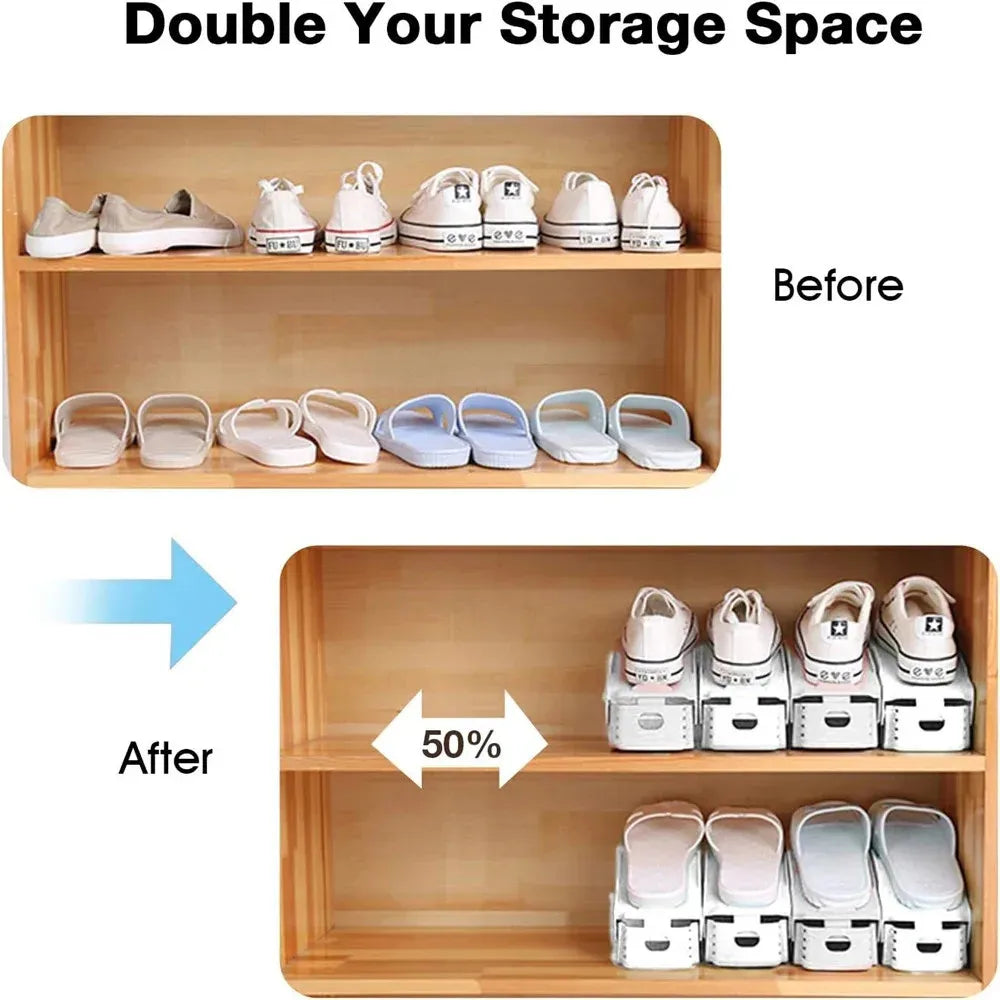
- Use a slim vertical shoe rack in a corner — corners are one of the most consistently wasted areas in a narrow hallway, and a tall, thin rack makes use of height rather than floor width. A stackable double-layer shoe rack does the same thing pair by pair, holding two rows in the depth of one.
Under-Stairs & Awkward Space Storage
If your hallway runs alongside a staircase, the space underneath it is very likely the single largest storage opportunity in the whole area — and one of the most commonly overlooked.
- Fit a bespoke under-stairs cupboard to turn the dead triangular space into a proper enclosed storage area for coats, the vacuum cleaner, or anything else you don't want on show.
- Add slide-out drawers built into the stair risers for a lower-cost alternative to a full cupboard conversion, useful for smaller or flatter items like shoes.
- Use baskets in any stair alcove or nook — even a shallow gap under the first few steps is enough for a couple of baskets, keeping loose items off the floor without any building work.
Small Touches That Keep Clutter From Piling Up
The smallest fixes are often the ones that make the most day-to-day difference, since they stop clutter from starting in the first place rather than tidying it away after.
- Keep a dish or tray by the door for keys and post, so they have one obvious home instead of ending up on every surface in the house.
- Add labelled hooks or cubbies at child height for younger household members' coats and bags — giving each person their own designated spot is one of the most effective ways to stop a shared hallway turning into a dumping ground.
- Use decorative baskets for scarves, gloves, and odds and ends — a woven basket on a shelf or under a bench hides small clutter while still looking intentional.
Making a Narrow Hallway Feel Bigger, Not More Cluttered
A narrow hallway can absorb a surprising amount of storage without feeling smaller, as long as the storage itself doesn't add visual bulk.
- Only keep in-season coats and shoes in the hallway and move everything else — heavy winter coats in summer, wellies in a dry spell — to a cupboard or under-bed storage elsewhere in the house. Wet boots and trainers are the exception that always ends up on the hallway floor; an electric shoe and boot dryer gets them dry and back in the rack overnight instead.
- Add a large or hinged mirror to bounce light back down the hallway and make it feel wider, ideally one that also hides storage behind it (see the two-in-one mirror idea above).
- Choose pale or light-coloured storage pieces over bulky dark furniture — a light console table or shoe cabinet reads as far less imposing in a narrow space than the same piece in a dark wood or black finish.
A Small Hallway Usually Has More Storage Potential Than It Looks Like
Almost every one of these ideas works with the hallway you already have, not a bigger one. The pattern worth taking away is the same one that applies to any small room: look up (wall space and floating shelves), look under (the stairs, a bench, a console table), and look at the door itself (hooks, an over-door organiser) before assuming there's nowhere left to put things. Start with whichever category is causing the most daily friction — for most households, it's shoes — and expand from there.
Frequently Asked Questions
How do I organise a small hallway?
Create one clear "dumping zone" near the door — a tray for keys and post, hooks for coats and bags at adult height — so everyone has an obvious place to put things down the moment they walk in. The golden rule is to only keep in-season, regularly used coats and shoes in the hallway itself, moving everything else elsewhere.
How can I make a narrow hallway look bigger?
Move storage onto the walls rather than the floor (hooks, floating shelves, an over-the-door organiser), add a large or hinged mirror to bounce light down the space, and choose pale-coloured storage furniture instead of bulky dark pieces that visually narrow the corridor further.
Where can I put shoes in a small hallway with no cupboard?
Use a narrow shoe cabinet just a few inches deep, an over-the-door shoe organiser that needs no wall space at all, a shoe storage bench that doubles as seating, or a slim vertical rack tucked into a corner.
Related Reading
Continue building out your small-space storage system with more from the series:
- 30 Small Space Organisation Ideas for Any UK Home
- 22 Small Kitchen Organisation Ideas for UK Homes
- 20 Small Bedroom Storage Ideas for UK Homes
- 20 Small Bathroom Storage Ideas for UK Homes
- 20 Garage Storage Ideas for UK Homes
- 20 Home Office Organisation Ideas for UK Homes
- 20 Living Room Storage Ideas for UK Homes
- 20 Under-Stairs Storage Ideas for UK Homes
- 20 Wardrobe Organisation Ideas for UK Homes
- 20 Small Utility Room Storage Ideas for UK Homes
- 20 Kids' Bedroom Storage Ideas for Small UK Rooms